
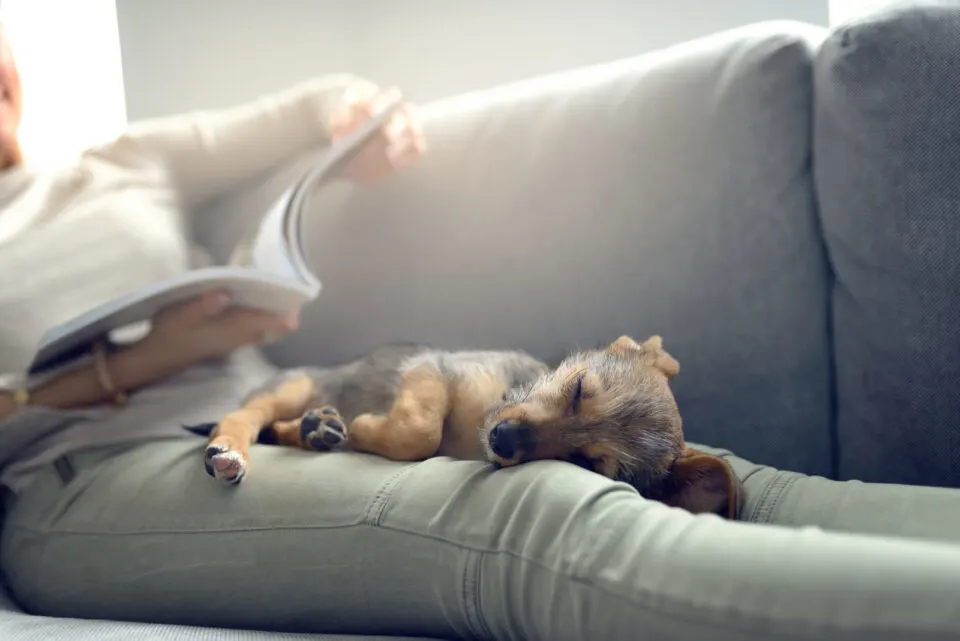
Most dog owners know the feeling. It’s late, and you’re settling in for a cozy movie night with your pup before bedtime.
You invite your pup to snuggle up, but as soon as it hops on the bed, it turns around, plops down, and leaves you staring at its furry backside.
When this happens, many dog owners wonder, Why does my dog sleep with its bum facing me? Doesn’t my furry friend want to cuddle? Is this a sign it doesn’t like me?
While this behavior might seem odd to humans—and definitely cause for concern if it were your partner—it’s actually perfectly normal canine body language.
There are several surprising reasons why dogs prefer this sleeping position, many of which pet owners might never have considered.
Whether you’re hoping to change this quirky habit or just curious about what it means, read on to discover the 10 reasons dogs sleep with their bum facing you.
Why Do Dogs Sleep With Their Back To You?
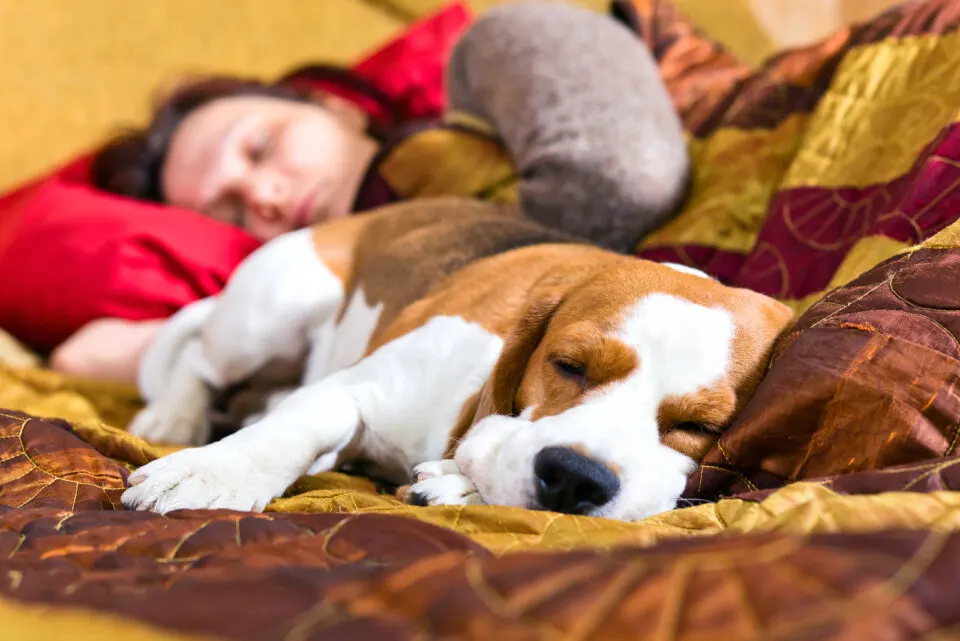
While there are several reasons your dog might prefer to snooze with its bum facing you, most are completely natural and nothing to worry about.
In fact, this quirky habit usually means your pup feels safe and trusts you. But there are a few other explanations behind this peculiar sleeping position.
Here’s a closer look at why dogs often choose to sleep with their bum facing you.
1. For Security
Just like humans, dogs are social creatures that thrive on companionship. As natural pack animals, they form strong bonds with their human families, often following them from room to room and even snuggling up in bed.
This pack mentality is rooted in survival instincts. By sticking close to their pack, dogs strengthen bonds and create a sense of security. Your furry friend likely sees you as the pack leader, the “alpha,” which explains why it always wants to be near you for mutual protection.
One reason your dog sleeps with its back to you is to keep watch over its surroundings. With its bum facing you and its eyes on the environment, your pup feels better prepared to react to any disturbance and protect the ones it loves most.
2. Out Of Trust
Another reason your dog sleeps with its bum facing you is that it’s a clear sign of trust and relaxation.
Dogs instinctively position themselves to face potential threats, ready to react if danger arises. By turning its back to you, your pup is showing complete confidence that you pose no threat. It’s a silent but powerful way of saying, “I trust you to watch my back.”
While you keep an eye on its vulnerable side, your dog stays alert to the environment, creating a shared sense of protection. This trust also shows when a dog sleeps on its side or back—positions that leave it exposed but signal comfort and security in your presence.
Beyond sleep, dogs display trust in other ways: staying relaxed around you, obeying commands, wagging their tail, and offering slow blinks during eye contact. These subtle cues confirm your bond and your dog’s sense of safety with you.
Remember, dogs are incredibly sensitive to human emotions. If you’re stressed or upset, your pup might pick up on it and act more guarded. But when you’re calm and content, your dog will mirror that trust and affection.
To nurture this bond, always approach your dog with kindness and patience. Trust is built over time and easily reinforced through positive interactions.
3. For Comfort
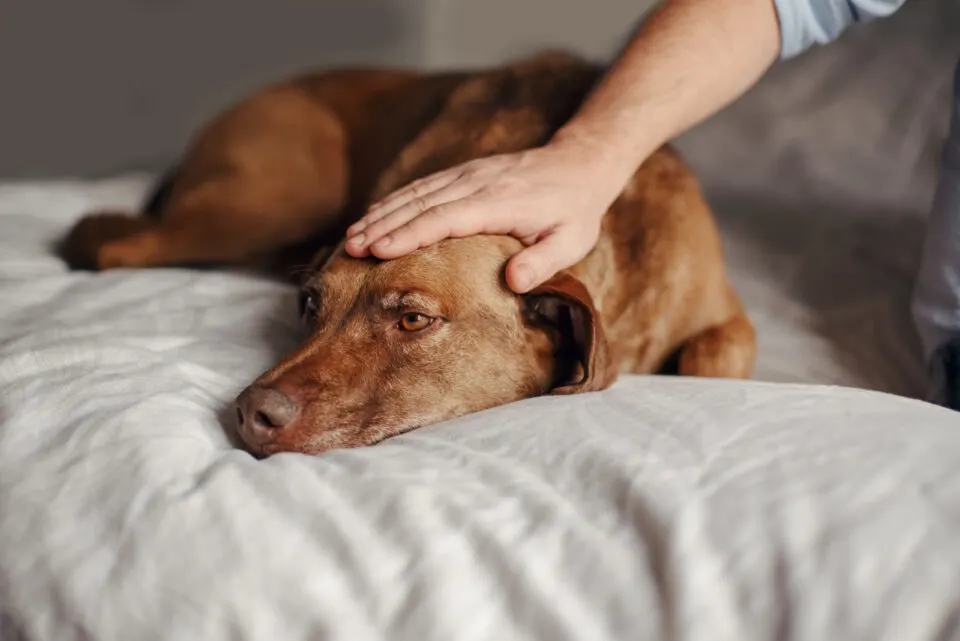
We humans often read too much into certain behaviors, searching for deeper meaning when the explanation is actually quite simple.
Sometimes, your dog faces its bum toward you for the most practical reason—it’s just comfortable.
Sometimes, the simplest explanation is the right one—your dog faces its bum toward you while sleeping because it’s just more comfortable.
Just like you need the perfect position for a good night’s rest, your pup also seeks out what feels best. Sometimes, that means snuggling close while still doing its own thing.
You can tell if your dog is truly comfortable by watching how it sleeps. If it’s stretched out on its side, bum toward you, breathing slowly and evenly, it’s likely enjoying a peaceful snooze. This position often signals that your pup feels safe, relaxed, and content with its surroundings.
Another sign of deep sleep is gentle twitching or soft moans. This happens during the REM (Rapid Eye Movement) phase, when most dreaming occurs.
If your pup seems lost in dreamland, it’s best to let it sleep, even if its bum is in your face. You can always shift a little and let your furry friend enjoy its rest.
Fun fact: Humans spend about 20–25% of the night in REM sleep, while dogs only spend around 10% in this deep sleep stage.
4. Scent Marking
Another reason your dog might sleep with its bum facing you is to mark you with its scent.
Dogs have scent glands, or anal sacs, on either side of their anus that release unique pheromones. These pheromones act like a personal signature, recognizable only to other dogs. By turning its back to you, your pup might be subtly marking you with its scent, claiming you as part of its pack.
This behavior is common among dogs as a way to signal belonging. Just like dogs sniff each other’s butts to greet or recognize one another, scent marking is their way of saying, “This human is mine.”
While it might seem odd or even a bit gross, it’s completely natural and nothing to worry about. In fact, it’s just another way your furry friend shows affection and loyalty.
However, if your dog also has a habit of peeing or pooping indoors, it might be time for some additional training. Check out our guide on how to potty train your dog for tips on curbing unwanted marking behavior.
5. To Avoid Ventral Contact
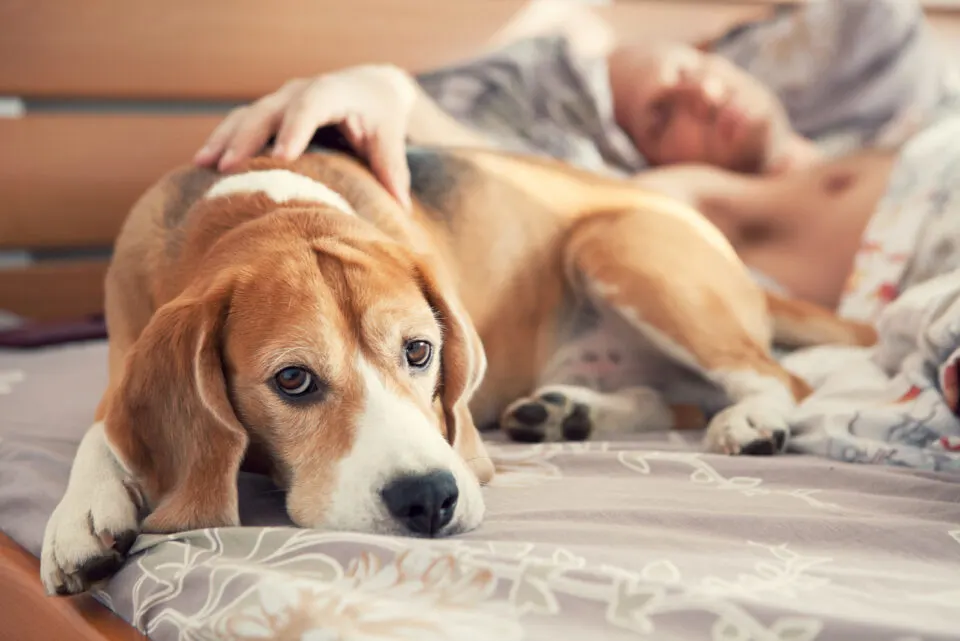
The word ventral is an anatomical term meaning the front or underside, with its antonym being dorsal, which refers to the backside or posterior.
Contrary to how humans are hard-wired to interact with each other face-to-face, most dogs usually don’t like ventral contact.
This is partly due to instinct, and it correlates to the security aspect of why dogs sleep with their bum facing you.
If your dog sleeps next to you, it often turns its back as a way of protecting you. By facing outward, your pup can stay alert to any potential threats while keeping you safe.
On the other hand, if your dog sleeps a bit farther away, like in its own bed, it’s more likely to face you. This position allows it to keep an eye on you and quickly close the gap if something seems off.
6. To Avoid Eye Contact
If your dog is more reserved or easily startled, it might sleep with its bum facing you to avoid eye contact. But don’t take it personally—dogs and humans interpret eye contact very differently.
While looking into your dog’s eyes can trigger the release of oxytocin, the “love hormone,” in both of you, dogs don’t always understand eye contact without clear social cues.
Though some dogs will lock eyes with someone they trust, most avoid prolonged eye contact because, in the canine world, it can signal dominance. Turning away simply means your pup feels safe enough to relax without needing to assert itself.
If your dog avoids eye contact, it’s often a sign of passivity, showing that it sees you as the dominant one in your relationship.
This behavior is especially common if you’ve recently adopted your pup and it’s still adjusting to its new environment. In this case, give your furry friend time to acclimate before encouraging more interaction.
To build trust, try teaching a “look at me” cue. Instead of simply staring into your dog’s eyes, speak gently while maintaining eye contact. Use treats and positive reinforcement to show that eye contact with you is safe and rewarding.
Practicing this will not only strengthen your bond but also help improve your pup’s focus and confidence.
Just remember—eye contact should only be encouraged with a dog that knows and trusts you. For unfamiliar dogs, prolonged eye contact can be seen as a threat or challenge.
7. Asking For Affection
Another reason your pup turns its bum toward you might be a simple request for affection.
Dogs often present their backs when they want a good scratch, especially around the base of the tail, where they can’t easily reach. It’s their way of saying, “Can you give me a little love here?”
If your dog wags its tail or leans into you while in this position, it’s a clear sign that it’s feeling relaxed and craving some attention.
Dogs often display a behavior known as the hip nudge, where they gently lean their rear toward you, asking for a little extra attention. It’s their way of saying, “Can you scratch right here, please?”
While dogs enjoy being petted all over, the bum is a particularly satisfying spot for many. This is because the area is packed with sensitive nerve endings, and it’s tough for dogs to reach on their own.
If your pup leans in, wags its tail, or even does a little happy dance while you scratch its rear, that’s a clear sign it’s loving the attention.
That said, not all dogs enjoy a posterior pat. Some might outgrow the preference, while others never care for it at all. Every pup is different, so it’s always best to pay attention to their body language and respect their boundaries.
8. Because Of Flea Infestation/Anal Gland Infection.
If your dog frequently asks for bum scratches, it might be more than just a craving for attention.
Pay close attention to its behavior. If you notice a foul odor, excessive licking, biting, or scooting across the floor, these could be signs of an anal gland issue or even a flea infestation.
In such cases, a vet visit is essential. Impacted or clogged anal glands are not only uncomfortable but can lead to serious infections and, in rare cases, even anal gland cancer if left untreated.
While most dogs are fine, around 15% experience anal gland problems, often requiring a veterinarian to manually express the glands and relieve the discomfort.
If the problem persists or keeps coming back, it can lead to serious soft tissue trauma and ongoing discomfort for your dog.
Fleas are another common culprit. These tiny parasites often hide in the fur around your dog’s rear, feeding on its blood and laying eggs. This can cause intense itching, skin irritation near the anus, and, if left untreated, lead to more serious health issues.
Fleas don’t just affect your dog—they can also pose a risk to your home and health. If an infestation spreads, it can quickly take over your yard and living space. That’s why it’s crucial to address the issue promptly and seek veterinary advice if you suspect fleas or other underlying problems.
9. You’re Encouraging Its Behavior
Dogs are quick to pick up on behaviors that bring positive reinforcement. If you’ve been giving your pup belly rubs, sweet talk, or extra attention every time it turns its bum toward you, you might be unintentionally encouraging the habit.
Over time, this repeated reward strengthens the behavior. Your dog learns that facing away means a guaranteed bum massage, making it more likely to keep snoozing in that position.
If you don’t mind your dog sleeping with its bum facing you, your pup certainly won’t either—especially if it means the occasional good rub.
But if you’d prefer to change this habit, avoid punishment or physically repositioning your dog. Instead, use positive reinforcement to encourage alternative sleeping positions.
Whenever your dog settles near your feet, faces you, or turns its belly your way, that’s the perfect moment to offer praise, gentle petting, or a treat. This approach helps your pup associate those positions with positive attention, gradually steering its behavior in the direction you prefer.
10. Your Dog Needs Some Space
Sometimes, your pup just needs a little downtime. After a long, active day, even the most social dogs appreciate some uninterrupted rest—just like you would if someone kept bothering you while you were trying to sleep.
If your dog senses your gaze while it’s trying to relax, it might turn its bum toward you simply to avoid disturbance and settle in more comfortably.
To support your pup’s rest, respect its need for quiet time. Try to minimize movement around its sleeping space and let it enjoy a peaceful, undisturbed snooze.
Should You Sleep In The Same Bed With Your Dog
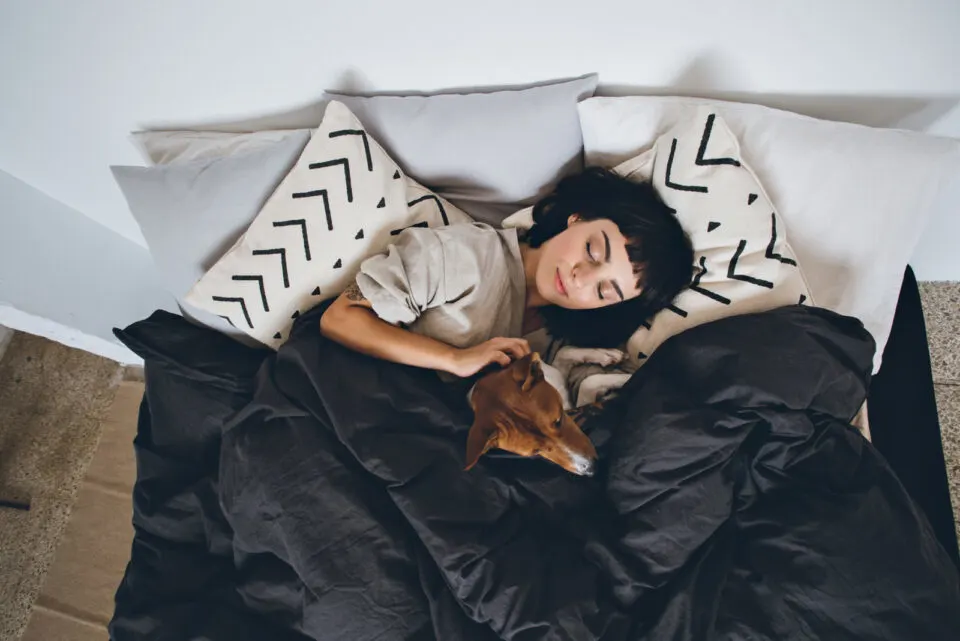
Sharing your bed with your dog is a heartwarming way to strengthen your bond. In fact, around 50% of dog owners welcome their furry companions into bed. But is it really a good idea?
While sleeping together can provide comfort, warmth, and a sense of security for both you and your pup, it’s not without its drawbacks. Factors like disrupted sleep, hygiene concerns, and potential behavioral issues are worth considering.
Ultimately, whether co-sleeping works depends on your lifestyle, your dog’s behavior, and personal preferences. Understanding the pros and cons can help you decide what’s best for you and your furry friend.
Co-sleeping with your dog can be a positive habit if you take a few key considerations into account.
🧼 1. Prioritize Hygiene
Proper hygiene is essential, especially after outdoor adventures. Without it, your pup might not be the only visitor to your bed—dirt, bugs, and parasites can tag along.
- Regular grooming: Brush and bathe your dog frequently.
- Paw care: Use doggy wet wipes to clean paws after walks and before bedtime.
- Preventative care: Stay on top of deworming and vaccinations as recommended by your vet.
😴 2. Ensure Quality Sleep for Both of You
While cuddling can be cozy, it’s important to assess whether sleeping together allows both you and your pup to get restful sleep. Some dogs are restless sleepers, which can lead to disrupted nights.
🛏️ 3. Create a Cozy Alternative
If you prefer your dog to have its own space, choose a bed that suits its size and sleeping style.
- Look for one with proper cushioning and support.
- Add a soft blanket and extra pillows for comfort.
- Placement matters: Keep the dog bed near yours to maintain that sense of closeness without sharing the same sleeping space.
Ultimately, whether or not to share your bed comes down to personal preference and what works best for you and your furry friend. With the right care and setup, everyone can enjoy a restful night—together or apart.
If proper hygiene is maintained, sharing your bed with your dog can actually have several scientifically backed benefits.
Cuddling with your pup boosts the release of oxytocin, the “love hormone” responsible for feelings of calm, relaxation, and security. This hormonal surge doesn’t just strengthen your bond—it also improves mental well-being.
Many dog owners report that sleeping with their furry friend helps reduce depression, anxiety, loneliness, and even insomnia. The comforting presence of a dog can make it easier to fall asleep and stay asleep.
Alongside the familiar “bum-facing” position, dogs often adopt other quirky sleeping habits, like curling up by your head or nestling between your legs. While these positions might seem odd to us, they’re just another way dogs seek comfort, warmth, and connection.
Why Does Your Dog Sleep On Your Clothes
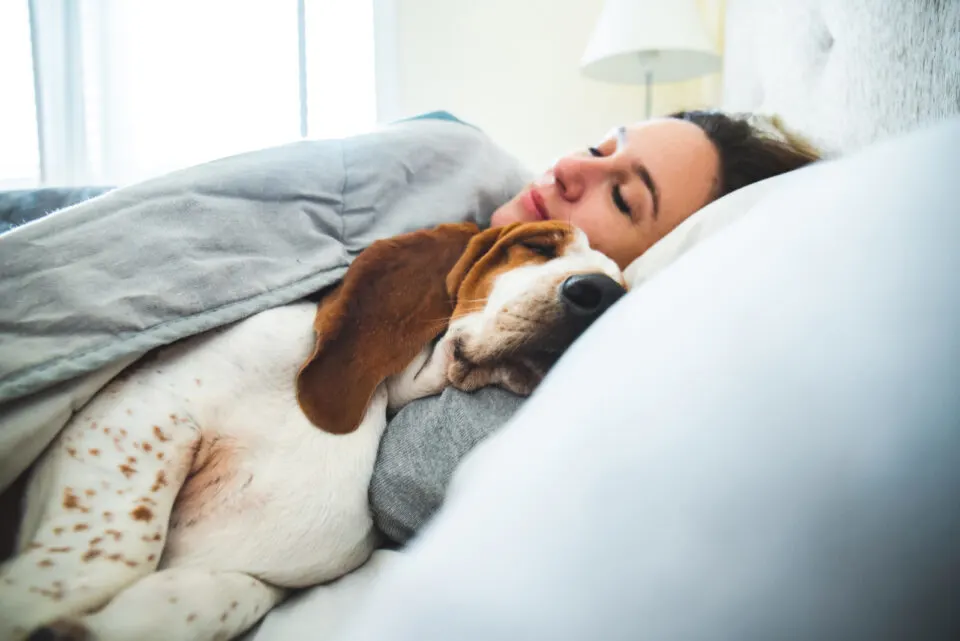
There are several reasons why your dog might choose to sleep on your clothes.
🛋️ 1. Comfort and Warmth
Your clothes provide a soft, cozy surface, making them an appealing spot for a nap, especially during colder months.
👃 2. Familiar Scent
Dogs are drawn to the comforting smell of their favorite human. Your scent on clothes can make your pup feel safe and connected, even when you’re not around.
😟 3. Separation Anxiety
In some cases, this behavior can be a sign of separation anxiety. Sleeping on your clothes helps ease stress when you’re away by offering a reassuring reminder of you.
🏡 4. Seeking Security, Not Dominance
Most of the time, dogs simply find your spot comforting. However, if your pup consistently takes your place and guards it, this could signal an attempt to assert dominance—behavior that shouldn’t be encouraged.
To manage this, provide a cozy alternative, like a dog bed with a worn t-shirt, giving your pup comfort without reinforcing territorial behavior.
Final Thoughts
The main reasons dogs sleep with their bum facing you are simple: they feel comfortable, safe, and secure by your side. In a way, it’s your pup’s unique love language—a quiet sign of trust and affection.
Try looking at it from your dog’s perspective—it’s actually a compliment. This sleeping position is a clear sign that your pup loves you, trusts you, and feels safe enough to let its guard down.
Now that you know why your furry friend prefers this cozy, bum-facing cuddle, it might be easier to cut your pup some slack and let it sleep however it feels most comfortable. After all, it’s just another way your dog shows how much it cares.